
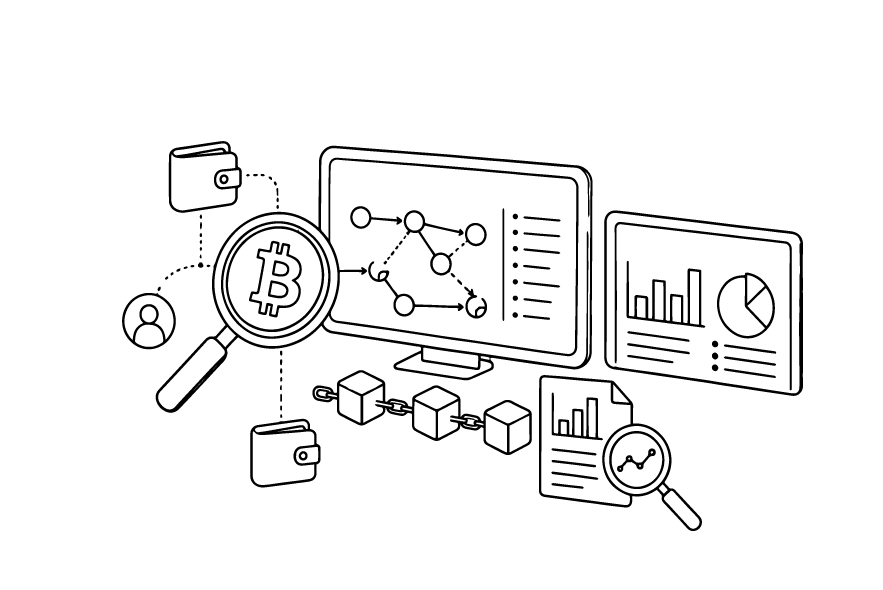
Cryptocurrency scams can begin with an investment promising guaranteed returns, a remote job paying in USDT, a free token offer or a message about recovering a wallet. The initial approach varies, but the objective is usually to persuade someone to transfer assets or grant access that the fraudster can exploit.
This article explains nine practical categories of cryptocurrency fraud, how to recognise them and what to do if money has already been lost. The categories are not a ranking and can overlap. A relationship scam may lead to a fake trading platform, followed by withdrawal fees and a second approach offering recovery services.
- Cryptocurrency scams cause losses in different ways: victims transfer assets, expose account or wallet access, or sign permissions allowing tokens to be moved.
- A professional website, positive reviews and a successful small withdrawal do not establish legitimacy. Verify the legal entity, domain, regulatory permissions and terms independently.
- Never share your seed phrase or private keys with support agents, advisers or anyone offering to recover funds.
- Connecting a wallet, signing a message and approving token spending have different consequences. Understand the rights a request grants before accepting it.
- If you suspect fraud, stop further payments, protect remaining assets and preserve evidence. Recovery prospects depend on the payment route, recipient and available legal remedies.
How Cryptocurrency Scams Work
Transfers, Exposed Access and Spending Permissions
The first mechanism is a payment made under false pretences. The victim sends cryptocurrency to an address controlled by the fraudster, believing the transfer funds an investment, pays an invoice or purchases a genuine service.
The second is compromised access. Criminals obtain exchange credentials, access to an email account, a private key or a wallet seed phrase. These incidents require different responses. Changing an exchange password may help secure an account, but changing a wallet application’s password does not invalidate a stolen private key.
The third mechanism involves permissions. A malicious website may ask the victim to approve token spending or sign a request that authorises an asset transfer. The attacker may not need the seed phrase at all. The relevant question is what the signature or permission allows, and who receives that authority.
Fraud, Market Losses and Technical Problems
A fall in a token’s price, an unsuccessful project or a temporary withdrawal problem does not automatically establish fraud. Cryptocurrency investments can lose value without deliberate deception, and legitimate services can experience technical failures.
Assessing a potential claim requires examining what was represented before payment, who controlled the platform or assets, what actually happened and how the conduct caused the loss. Those distinctions affect both the evidence needed and the possible recovery route.
Nine Cryptocurrency Scams to Watch for in 2026
Scam | How the loss occurs | Main warning sign | What to verify |
|---|---|---|---|
Fake platforms and Ponzi schemes | Funds support a fictitious investment or payments to earlier participants | Unexplained returns and blocked withdrawals | Operator, permissions and economic model |
Relationship investment scams | Personal trust is used to secure deposits | A new contact introduces an investment | The offer independently of the relationship |
Phishing and fake support | Credentials or wallet secrets are stolen | Requests for passwords, seed phrases or keys | Official website and support channel |
Fake airdrops and wallet drainers | A signature grants asset spending rights | Unclear permissions for a supposed reward | Contract, asset and permission scope |
Rug pulls and pump-and-dump schemes | Insiders extract liquidity or sell into artificial demand | Concentrated control and aggressive promotion | Token distribution, liquidity and administrator rights |
Fake celebrity giveaways | Victims send assets expecting a larger payout | Send cryptocurrency to receive more | The offer through an independent official channel |
Fake jobs and task scams | Deposits are required to unlock work or earnings | Paying to receive wages or complete tasks | Employer identity and the payment request |
Address poisoning | Funds go to a lookalike address | Copying a recipient from transaction history | Full address, network and recipient |
Recovery scams | Victims pay additional fraudulent fees | Guaranteed recovery or an unlocking payment | Provider identity, contract and actual work |
1. Fake Trading Platforms and Ponzi Schemes
A fake trading platform can display balances, transactions and profits without executing the investment activity it claims to provide. The apparent earnings encourage larger deposits. When the victim requests a withdrawal, the operator demands a tax payment, insurance, a verification fee or an account upgrade.
A Ponzi scheme has a different financial mechanism: money from new participants funds payments to earlier participants instead of genuine investment returns. A platform may combine fictitious trading with this payment structure.
How to avoid it: establish who operates the service, how assets are held and how the claimed returns are generated. Verify applicable permissions independently. A successful small withdrawal does not prove legitimacy: allowing early withdrawals can encourage larger deposits.
2. Relationship Investment Scams
These schemes, often called pig-butchering scams, begin with friendship, romance or regular conversation. Over time, the contact introduces an investment opportunity, sometimes involving a supposedly successful trader, relative or exclusive platform.
The victim transfers confidence in the person to the investment. Screenshots of profits, personal photographs and video calls can reinforce that confidence without establishing who controls the platform or where the money goes.
How to avoid it: assess the investment independently of the relationship. The duration of the conversation and the apparent authenticity of the contact do not replace checks on the operator, custody arrangements and withdrawal terms.
3. Phishing Websites, Fake Apps and Fake Support
Fraudsters imitate exchange websites, wallet applications and customer support teams. They may claim that a wallet needs synchronisation, an account requires verification or a security incident must be resolved immediately.
The requested information determines the risk. Stolen exchange credentials can expose a custodial account. A disclosed seed phrase or private key can expose assets controlled by that key, regardless of whether the victim later changes the application’s password.
How to avoid it: use independently verified website addresses and support channels. Check the publisher of an application before installing it. Availability in an app store is not conclusive proof of legitimacy. Never give support staff your seed phrase or private keys.
4. Fake Airdrops and Wallet Drainers
A supposed free token, NFT reward or staking opportunity may lead to a website that requests a dangerous signature or token approval. The victim expects to claim a benefit but instead grants spending rights to an attacker-controlled contract or address.
The scope matters. An approval may concern a particular token and a specified or unlimited amount. It does not necessarily grant access to every asset in a wallet, but it can still expose the assets covered by that permission.
How to avoid it: check the contract, the token, the permitted spender and the spending limit. Do not approve a request that you cannot explain. A message described as verification or claiming a reward may have financial consequences.
5. Rug Pulls and Pump-and-Dump Schemes
In a rug pull, project insiders may remove liquidity, exploit administrator powers or sell holdings in a way that leaves other participants with severely impaired assets. The specific mechanism depends on the project’s contracts and control arrangements.
In a pump-and-dump scheme, organisers create artificial enthusiasm and buying pressure, then sell their holdings into the demand they helped generate. Public promotion may conceal the organisers’ positions and incentives.
How to avoid it: examine token concentration, liquidity arrangements, transfer restrictions and administrator rights. Consider who can change the rules or withdraw liquidity. An audit or publicly identified team does not guarantee that a project is safe.
6. Fake Celebrity Giveaways and Deepfake Promotions
These scams use a familiar person, company or public figure to promote an offer such as sending cryptocurrency to receive twice as much in return. The promotion may appear in a fabricated video, a livestream or a compromised social media account.
Deepfake technology strengthens the impersonation, but the loss mechanism remains the payment or permission the victim is persuaded to provide. A realistic face or voice does not authenticate the transaction.
How to avoid it: verify the announcement through an independently located official channel. Do not send cryptocurrency on the promise that a celebrity or company will multiply it and return the proceeds.
7. Fake Cryptocurrency Jobs and Task Scams
A supposed employer offers remote work involving product ratings, optimisation or simple online tasks. A dashboard displays earnings, but the worker must deposit cryptocurrency to complete a task set, correct a negative balance or unlock payment.
Other recruitment scams distribute malicious software disguised as an assessment, interview tool or work application. The resulting loss may involve stolen credentials or wallet access rather than a direct deposit.
How to avoid it: verify the employer and vacancy independently. Ask why a worker must pay to receive earnings. Treat unexpected software installation requests cautiously, especially on a device used for financial accounts or cryptocurrency wallets.
8. Address Poisoning and Recipient Substitution
Address poisoning places a lookalike address in a victim’s transaction history, hoping that the victim later copies it as a familiar recipient. Some malware instead replaces a copied address through the clipboard.
Checking only the first and last characters can miss the substitution. An entry appearing in transaction history does not establish that its address belongs to the intended recipient.
How to avoid it: verify the full destination address, network and recipient through a trusted independent channel. A small test transfer can help confirm a technical destination already verified with the recipient, but it does not establish that an investment or business is legitimate.
9. Cryptocurrency Recovery Scams
After an initial loss, victims may hear from someone claiming to be an investigator, lawyer, exchange representative or recovery specialist. The caller says the assets have been found but requires a certificate, tax payment or unlocking fee before release.
Knowledge of the original loss is not proof of authority. The same fraudsters may be making the approach, or information about the victim may have been shared or sold.
How to avoid it: verify the provider’s identity, professional status where relevant, written agreement and proposed work. Legitimate professional fees should be distinguished from fabricated payments supposedly needed to unlock assets. Blockchain tracing can help establish facts, but it does not itself confer authority to seize or return funds.
How to Check a Cryptocurrency Platform Before Depositing
Legal Entity, Domain and Payment Recipient
Identify the entity operating the website, the party named in the contract, the application publisher and the recipient of the funds. Differences are not necessarily fraudulent, but they should have a clear and verifiable explanation.
Company incorporation is not the same as permission to provide regulated services. A copied licence number or the name of a genuine company does not establish that the company controls the website you are using.
Regulatory Status in Europe
For services within the scope of the EU Markets in Crypto-Assets Regulation, check the relevant ESMA – and national authority records. Match the exact legal entity and services, and establish which authorisation or other applicable legal basis permits the activity.
The maximum MiCA transitional period – ended on 1 July 2026. An old national registration alone should therefore not be treated as evidence of current permission to provide services requiring MiCA authorisation. The applicable position still depends on the entity and activity.
Regulatory authorisation does not insure investment performance or guarantee profits. The United Kingdom and Switzerland have separate regulatory frameworks and require their own checks.
Withdrawal Terms and Promised Returns
Read the fee schedule, withdrawal limits, exit conditions and custody terms before depositing. Establish who owns and controls the assets and which documents govern the relationship.
A genuine network transaction fee is different from a large payment demanded by an unknown third party to release an account balance. Labels such as gas, AML verification or tax do not establish that a payment is necessary or legitimate.
How to Protect Your Wallet and Exchange Account
Protecting Seed Phrases and Private Keys
Keep wallet recovery information secure and do not send it through messages, enter it into unfamiliar forms or disclose it to support staff. Anyone who obtains the relevant secrets may gain control over the associated assets.
Wallets use different key-management models. A product that does not present a conventional seed phrase still requires protection against account compromise, deceptive signatures and fraudulent transfers.
Reviewing Signatures and Permissions
Before signing, identify the asset, the recipient or spender and the scope of the authority requested. A signed message can have consequences even when it does not look like an ordinary transfer.
Disconnecting a wallet from a website does not necessarily revoke existing token approvals. Permissions can remain active until they are revoked or otherwise cease to apply.
Securing Accounts and Payment Processes
Protect the email address linked to financial accounts, use unique passwords and enable appropriate multifactor authentication. Unexpected loss of mobile service can warrant contacting the mobile provider and checking for account compromise.
A hardware wallet helps protect keys, but it cannot make a harmful transaction safe if the owner approves it. Businesses should also separate payment preparation from approval and independently verify unusual recipient or payment changes.
What to Do Immediately After a Cryptocurrency Scam
What happened | First action | Evidence to preserve |
|---|---|---|
Cryptocurrency was sent | Stop further payments and notify the relevant platform | Network, addresses, transaction hashes, receipts and messages |
A seed phrase or private key was exposed | Treat the affected keys as compromised and protect remaining assets | Incident details and transactions, without sharing the secrets again |
A suspicious approval was signed | Review and, where appropriate, revoke permissions through a trusted method | Contract address, request details and transaction identifiers |
Exchange credentials or codes were exposed | Secure access through official channels | Login alerts, session records and withdrawal notices |
Suspicious software was installed | Use a trusted device for urgent account protection | Software name, download source and installation time |
If Cryptocurrency Has Already Been Sent
Preserve the transaction details and contact the platform used to buy or send the assets. If there is evidence that a receiving address belongs to a service provider, notify that provider through its official reporting channel as well.
Explain what happened accurately and provide the network and transaction hashes. The sending platform cannot independently reverse a confirmed external blockchain transaction, but the information may assist investigation or action involving assets still under a provider’s control.
If Wallet Keys Have Been Exposed
Treat the affected wallet as compromised. Where possible, protect remaining assets by transferring them securely to a wallet with independently generated keys on a trusted device. Changing the old wallet application’s password is insufficient.
Avoid blindly adding funds to a compromised wallet to pay transaction fees. Automated theft mechanisms may immediately remove newly deposited assets. The appropriate response depends on the type of compromise and the assets involved.
If a Suspicious Permission Has Been Signed
Stop interacting with the website. Use a trusted method to review the relevant approvals and revoke dangerous permissions where possible.
Revocation does not return assets already taken. It also does not resolve a disclosed seed phrase or private key. Determine whether the incident involved an approval, a transfer, a signed authorisation or broader key compromise.
If an Account or Device Has Been Compromised
Contact the provider through its official channels, secure the linked email account and terminate unauthorised sessions where available. Use a trusted device for urgent security changes if the original device may contain malware.
Describe the incident precisely. Stolen credentials, remote access and a transfer authorised by the victim under deception are different factual situations and may require different responses.
Can Stolen Cryptocurrency Be Recovered
Tracing Transactions and Identifying Recipients
Public blockchain records can help establish where assets moved. However, following transactions, attributing an address to a service and identifying the person responsible are separate evidential steps.
Address labels, clustering and other analytical methods have limitations. A tracing result should distinguish verified facts from inferences. An apparent connection in transaction data does not by itself establish criminal responsibility.
Working with Exchanges and Preserving Assets
A timely report may help a provider preserve records or consider action concerning assets it controls. The available steps depend on its procedures, jurisdiction and the legal authority supporting the request.
A private demand letter is not equivalent to a binding court or law-enforcement order. Freezing assets, where possible, is also distinct from establishing entitlement to their return.
Bank Complaints, Card Disputes and Civil Claims
Separate the fiat payment from any subsequent cryptocurrency transfer. If a card purchase of cryptocurrency was properly fulfilled and the buyer later sent the assets to a scammer, a chargeback is not automatically available against the original purchase.
Depending on the circumstances, possible routes may include a bank complaint, an eligible ombudsman process, engagement with a platform or a civil claim. Their availability depends on the payment method, jurisdiction, recipient and evidence. Not every recovery requires litigation, and a tracing report alone is not a complete recovery strategy.
What Determines Recovery Prospects
Relevant factors include the quality of the evidence, whether responsible parties can be identified, whether assets remain available and whether a proportionate legal route exists. Speed can matter, but it is not the only factor.
Distinguish actual deposits and subsequent fees from fictitious profits displayed on a platform. There is no universal recovery percentage or timetable that can responsibly be applied to every cryptocurrency fraud case.
How Veritas Advisory Group Can Help
Veritas Advisory Group can help assess the alleged scheme, reconstruct the payment history and organise evidence for an evaluation of potential recovery routes. The starting point is what the platform or contact promised, who received the funds and what steps have already been taken.
That assessment helps establish whether the matter calls for a bank complaint, technical analysis, a report to the relevant authorities or consideration of a civil claim. The appropriate approach depends on the facts and the available evidence.
For an initial review, prepare the amounts and dates of payments, platform details, correspondence, recipient information, blockchain networks and transaction hashes, and any responses from banks or exchanges. Seed phrases, private keys and one-time access codes are not needed for an initial case assessment.
Frequently Asked Questions
Key categories include fake investment platforms, relationship investment scams, phishing, malicious wallet permissions, rug pulls and pump-and-dump schemes, fake giveaways, job and task scams, address poisoning and recovery scams. Several can form part of the same fraud.
An ordinary wallet connection does not usually grant permission to transfer assets. Subsequent signatures, approvals or transactions can do so. Review each request separately rather than treating the whole interaction as a harmless connection.
No. Fraudulent operators may allow early withdrawals to build confidence and encourage larger deposits. Verify the operator and the service independently.
Yes. Losses can result from token approvals, signed transactions, compromised exchange accounts or transfers made by the victim under deception. A stolen seed phrase is only one possible mechanism.
No. It can help protect private keys, but it does not prevent the owner from approving a harmful transaction or sending assets to a fraudster.
Check official ESMA and relevant national authority records. Match the exact legal entity, the services concerned and the applicable authorisation or legal basis. A brand name or old registration alone is insufficient.
Independently verify the legal or contractual basis, calculation and recipient before paying. A real network fee is different from an unexplained payment demanded to unlock a supposed balance. The label attached to a fee does not establish its legitimacy.
A bank cannot independently reverse a confirmed transaction on a public blockchain. Any related bank or card payment must be assessed separately under the rules and procedures applicable to that payment.
Keep payment records, messages, platform and account details, recipient addresses, networks, transaction hashes, relevant terms and withdrawal responses. Preserve any correspondence with banks, exchanges and authorities as well.
Warning signs include guaranteed recovery before reviewing the evidence, false claims of official authority, demands for unlocking payments and requests for wallet secrets. Verify the person or organisation, the agreement and the work actually proposed.