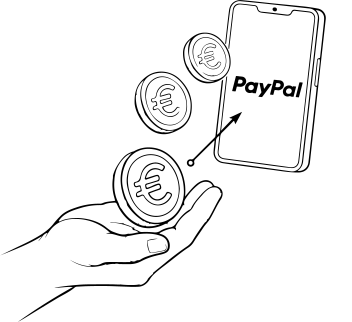
- PayPal can refund money lost to fraud through its built-in Buyer Protection and dispute resolution mechanisms – making it one of the most effective recovery tools in Europe compared to standard bank transfers.
- PayPal Buyer Protection may cover eligible purchases not received or significantly not as described, including original shipping costs. The deadline depends on the claim type and account-country terms; it is not always 180 days.
- For in-scope unauthorised payments, applicable payment law generally requires reimbursement immediately and by the end of the next business day, subject to statutory notification and payer-liability rules and the reported payer-fraud suspicion exception. Reimbursement does not normally await chargeback or a completed investigation.
- For voluntarily confirmed transfers – including investment scams, romance scams, fake support, and phishing – the refund is not guaranteed, even though PayPal analyses whether social engineering indicators were present, whether the payment can be classified as a purchase, and whether timely blocking measures were taken.
- For an eligible card-funded payment, choose between PayPal Buyer Protection and an issuer dispute for the same transaction. PayPal closes its dispute if a chargeback is pursued simultaneously; an issuer claim may follow a PayPal rejection if its deadline remains open.
How PayPal’s Refund Mechanism Works
PayPal operates as a payment intermediary, not a traditional bank. This distinction is important for understanding the available recovery mechanisms. PayPal provides its own built-in dispute resolution and Buyer Protection framework that operates independently of bank chargeback procedures. In many cases, PayPal’s internal process is faster and more accessible than bank-level disputes. PayPal’s contractual Buyer Protection does not replace statutory rights. Applicable EU or UK payment law may require prompt reimbursement of unauthorised payments independently of Buyer Protection, subject to notification and liability rules. The key advantage is that PayPal acts as a mediator between the buyer and seller, with the ability to freeze funds and reverse transactions within its ecosystem.
Buyer Protection – Item Not Received and Not as Described
PayPal Buyer Protection covers qualifying purchases where the item was not received (Item Not Received) or was significantly not as described (Significantly Not as Described). Check the account-country terms and claim type. Item Not Received generally has a 180-day deadline; Significantly Not as Described may require filing within 30 days of delivery or 180 days of payment, whichever is earlier. Unauthorised payments follow separate notification rules. PayPal mediates the dispute with the seller. If the dispute is resolved in the buyer’s favour, PayPal initiates a full refund including shipping costs. This mechanism is one of the strongest consumer protections available through any payment platform in Europe and applies to purchases of goods and services that meet the Buyer Protection eligibility criteria.
Unauthorised Transactions – Account Compromise
Where the PayPal account was accessed by third parties without the user’s consent and transactions were executed without authorisation, PayPal conducts an internal investigation. For in-scope unauthorised payments, applicable payment law generally requires reimbursement immediately and by the end of the next business day, subject to statutory notification and payer-liability rules and the reported payer-fraud suspicion exception. Reimbursement does not normally await chargeback or a completed investigation. The user should select “Unauthorized transaction” in the Resolution Center when opening the dispute. Simultaneously, the password must be changed and two-factor authentication enabled to secure the account against further unauthorised access.
Voluntarily Confirmed Transfers
Where the user confirmed the payment themselves – even under the influence of investment scams, romance scams, fake support calls, or phishing – the refund is not guaranteed. PayPal analyses the specific circumstances: whether social engineering indicators were present, whether the payment can be classified as a qualifying purchase under Buyer Protection, and whether timely measures were taken to block the account and report the fraud. Voluntarily confirmed transfers to fraudsters – particularly those framed as investments, donations, or personal payments rather than purchases – fall outside the core Buyer Protection framework and carry a significantly lower probability of recovery through PayPal alone.
When PayPal Refuses a Refund
PayPal may refuse a refund in several situations. First – the payment does not qualify under Buyer Protection because it was sent as a personal transfer rather than a purchase of goods or services. Second – the seller provides proof of delivery that meets PayPal’s requirements. Third – the dispute was filed after the 180-day window. Fourth – the user confirmed the payment themselves and the transaction cannot be classified as a qualifying purchase. Fifth – the transaction involves cryptocurrency operations outside PayPal’s ecosystem. A refusal by PayPal is not the end of the recovery process – the client can pursue a chargeback through their bank if the payment was funded by card, file a regulatory complaint, or initiate civil proceedings.
Immediate Steps After Discovering Fraud
Step 1 – Open a Dispute in the Resolution Center
The first and most critical action is to open a dispute for the specific transaction through the PayPal Resolution Center at https://www.paypal.com/disputes. For unauthorised transactions, select “Unauthorized transaction.” For purchases where goods were not received or not as described, select the corresponding category. Check the account-country terms and claim type. Item Not Received generally has a 180-day deadline; Significantly Not as Described may require filing within 30 days of delivery or 180 days of payment, whichever is earlier. Unauthorised payments follow separate notification rules. Opening the dispute triggers PayPal’s investigation and mediation process.
Step 2 – Secure the Account
If there are signs of account compromise, the password must be changed immediately and two-factor authentication must be enabled. The user should review recent account activity for any additional unauthorised transactions and report all suspicious activity through PayPal’s Security Center at https://www.paypal.com/security/report-fraud. For suspicious emails claiming to be from PayPal, forward them to spoof@paypal.com.
Step 3 – Preserve All Evidence
All correspondence with the fraudster, invoices, order confirmations, screenshots of product listings or fraudulent websites, delivery tracking information, recipient details, and any other supporting materials must be preserved without alteration. Digital evidence forms the foundation for PayPal’s dispute review and any subsequent bank chargeback, regulatory, or judicial proceedings.
Step 4 – Choose a Payment Dispute Route
For an eligible card-funded payment, choose between PayPal Buyer Protection and an issuer dispute for the same transaction. PayPal closes its dispute if a chargeback is pursued simultaneously; an issuer claim may follow a PayPal rejection if its deadline remains open. The bank chargeback is available within standard payment scheme timeframes (typically up to 120 days) and targets the card transaction between the client and PayPal.
Step 5 – File a Police Report and Escalate
Alongside the chosen payment-dispute procedure, a criminal complaint should be filed with the relevant national police authority. The police report is an evidentiary document that supports all recovery channels. If PayPal’s dispute process does not result in a refund and the bank chargeback is unsuccessful, the client can file a regulatory complaint or initiate civil proceedings.
Alternative Recovery Mechanisms
Chargeback Through Your Bank
If the payment to PayPal was made by card, a chargeback through the card-issuing bank is available under Visa/Mastercard rules. This mechanism operates independently of PayPal’s internal dispute and targets the card transaction. Chargeback eligibility, deadlines and starting dates depend on the card scheme and dispute category; 120 days is common but not universal. This is the most important fallback where PayPal refuses the dispute.
Complaint to the Financial Regulator
PayPal (Europe) S.à r.l. et Cie, S.C.A. is registered in Luxembourg and supervised by the Commission de Surveillance du Secteur Financier (CSSF). A regulatory complaint may inform supervisory assessment, but does not automatically initiate a review, require the provider to reconsider or produce compensation. In other jurisdictions where PayPal operates, complaints can be directed to the relevant national financial regulator. Where systemic failures in consumer protection or fraud prevention are identified, the regulator may require PayPal to reconsider its position.
Civil Litigation
Civil proceedings against the fraudster are available where the fraudster is identified and their assets are located. Civil proceedings against PayPal may be available under EU consumer protection law where PayPal’s dispute resolution failed to meet its obligations. An EAPO may preserve bank funds in qualifying cross-border cases in participating EU Member States, excluding Denmark. Creditor domicile in a participating Member State and court approval are required; the measure does not cover every asset or UK accounts. Civil litigation against the seller is available independently of PayPal’s dispute decision.
Criminal Proceedings
A criminal complaint provides information for assessment by the competent authority. Investigation and access to bank, platform or telecommunications records depend on legal powers and procedural requirements; filing alone does not guarantee either. Criminal investigation is the primary tool for identifying anonymous fraudsters and tracing the movement of stolen funds across jurisdictions.
PayPal Contact Details for Fraud Enquiries
PayPal is a digital payment platform with no traditional branch network. The primary channels are the Resolution Center and Help Center. Legal entity for the EU: PayPal (Europe) S.à r.l. et Cie, S.C.A., 22–24 Boulevard Royal, L-2449 Luxembourg. Resolution Center (disputes and fraud): https://www.paypal.com/disputes. Security Center (fraud reporting): https://www.paypal.com/security/report-fraud. Phishing email reports: spoof@paypal.com. Help Center: https://www.paypal.com/help (chat and callback available after login). Phone support (EU / Ireland): +353 1 436 9004. Regulator: CSSF (Luxembourg).